
How pergolas provide shade
Pergolas are often chosen for their clean appearance and their ability to create defined outdoor spaces. Understanding how pergolas provide shade helps homeowners evaluate how these structures improve comfort while maintaining an open, airy feel in outdoor environments.
For homeowners comparing outdoor structures, it is important to understand that pergolas are designed for filtered shade rather than complete protection. The amount of comfort they provide depends on beam spacing, orientation, added shade elements, and how the structure is used throughout the day. If you are comparing structural layouts, it helps to review different pergola system designs to see how construction choices affect performance.
How do pergolas provide shade?
Pergolas provide shade by filtering direct sunlight through spaced overhead members rather than blocking it completely. They create partial cover, reduce glare, and improve comfort while still allowing airflow and an open outdoor feel. Their shade performance depends on slat spacing, sun angle, structure orientation, and whether added shade features are included.
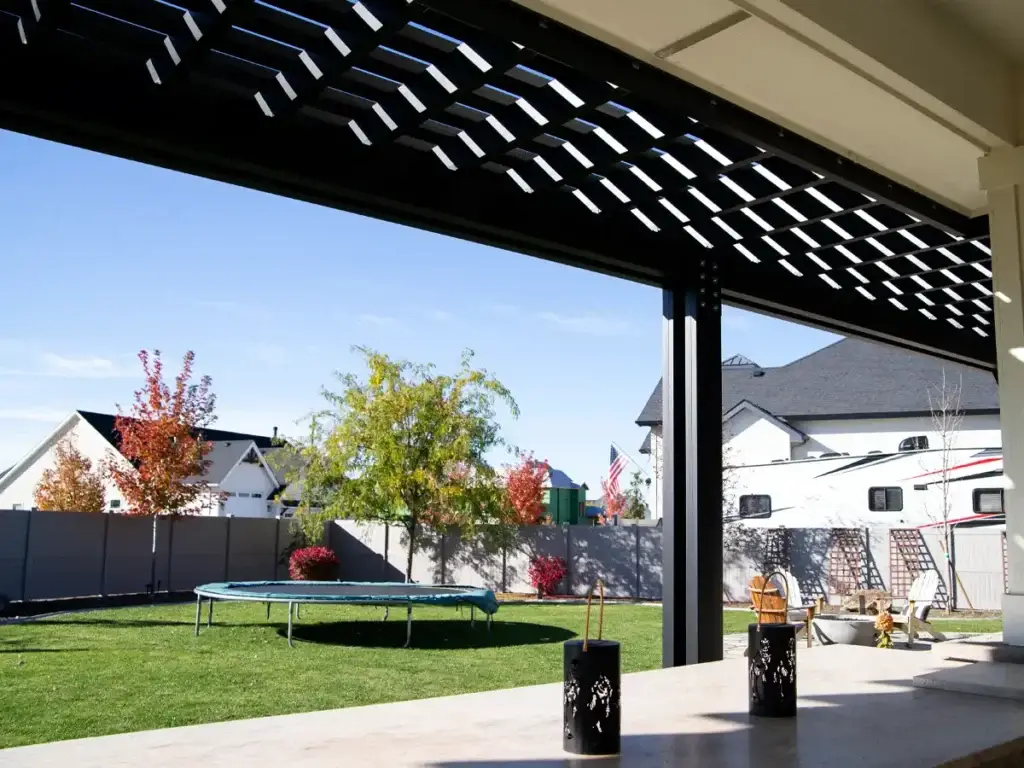
A pergola creates shade through a framework of posts, beams, and rafters or slats overhead. Because the roof structure is open, sunlight passes through in a controlled way instead of being fully blocked. This produces patterned shade that shifts throughout the day as the sun moves.
That filtered shade is often enough to make a patio more usable, especially in the morning, late afternoon, or in spaces where homeowners want relief from direct sun without closing the area in. Pergolas are especially effective when the goal is to create a comfortable outdoor room that still feels connected to the yard and sky.
What affects how much shade a pergola gives?
Several design factors influence how much shade a pergola provides. Two pergolas may look similar from a distance but perform very differently in daily use.
Slat spacing
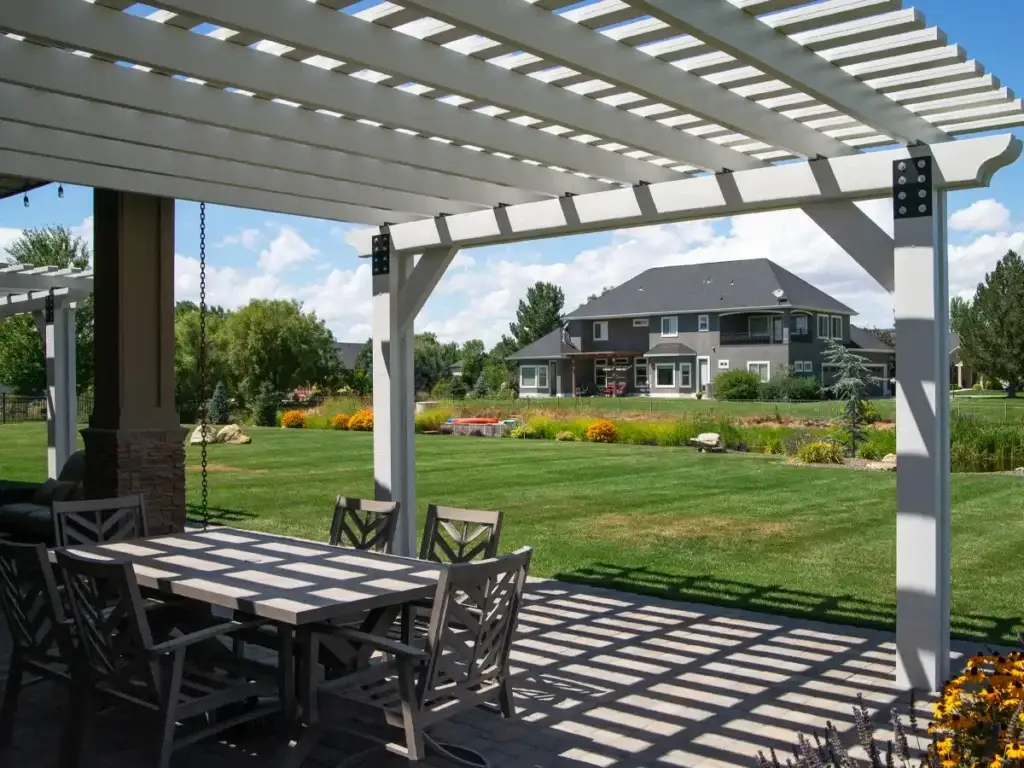
The closer the overhead members are placed, the more sunlight is interrupted before it reaches the patio below. Wider spacing allows more light through and creates a brighter, more open feel.
Orientation to the sun
The direction the pergola faces has a major impact on shade performance. In many regions, west-facing exposure creates the strongest late-day heat load. A pergola that is positioned to interrupt that angle of sunlight can feel noticeably more comfortable during peak afternoon hours.
Height and structure size
A taller pergola may feel more open, but it can also allow more angled light into the space. A lower structure or one with more overhead coverage can improve shade concentration over seating and dining zones.
Added shade features
Some pergolas include optional fabric canopies, outdoor shade screens, privacy panels, or other shade enhancements. These additions can increase comfort significantly, especially in climates with long sun exposure windows or strong western sun.
Are pergolas a good choice for hot, snowy, or seasonal climates?
Pergolas can work well across a range of climates, but they should be chosen for the right reasons. They are not full weather barriers. Their strength is in balancing shade, airflow, and design flexibility.
In hot climates, pergolas help reduce direct solar exposure while allowing heat to escape upward. This makes them a practical option where airflow matters just as much as shade. In dry heat, that open design can feel much more comfortable than a fully enclosed overhead structure.
In colder or snowy regions, pergolas are often used more for seasonal comfort and landscape definition than for year-round weather protection. Material selection and structural engineering become especially important where snow load is a factor. Homeowners in four-season regions should think carefully about long-term durability, maintenance, and how the structure will perform across changing weather conditions.
For broader regional planning considerations, it can help to review outdoor structure guidance for homes in the Treasure Valley, Eastern Idaho, and similar seasonal climates. Homeowners comparing seasonal durability can also review patio cover options for Eastern Idaho snow when evaluating year-round performance.
How do pergolas compare to solid patio covers?
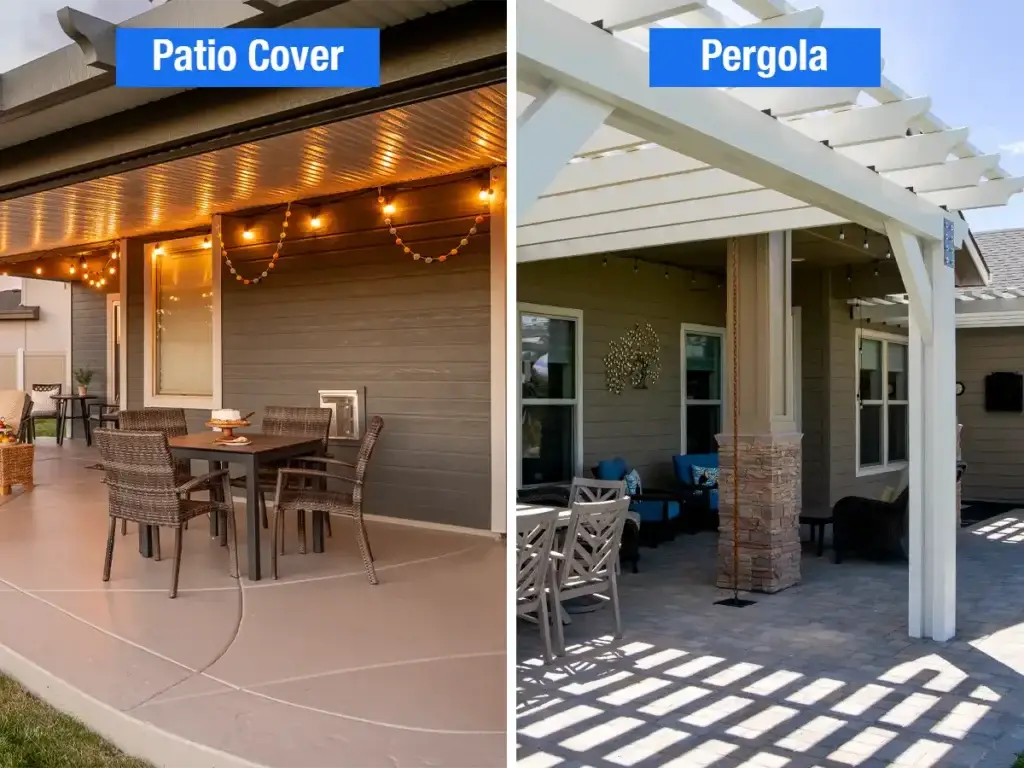
Pergolas and aluminum patio covers both improve outdoor living spaces, but they serve different purposes. A pergola is best understood as a shade-filtering structure. A patio cover is a weather-blocking structure.
| Feature | Pergola | Solid Patio Cover |
|---|---|---|
| Sun protection | Partial and filtered | Full overhead shade |
| Rain protection | Minimal to none | Strong protection |
| Airflow | Excellent | Good, but more enclosed overhead |
| Visual openness | Very open | More enclosed appearance |
| Best use case | Defined outdoor living with light shade | Maximum all-weather patio coverage |
For homeowners deciding between these two structure types, it is useful to compare pergolas with a solid patio cover in practical outdoor use. The right choice depends less on style alone and more on how much protection you actually want from sun, rain, and seasonal weather. It also helps to review attached vs freestanding patio covers when layout and placement are part of the decision.
When is a pergola the right choice?
A pergola is usually the right choice when the goal is to improve comfort and structure without fully covering the outdoor space. It works especially well for patios used for relaxing, dining, or entertaining when homeowners still want sunlight, airflow, and an open-sky feel.
Homeowners also comparing comfort benefits across different structures can review how shade structures reduce backyard temperatures to understand how filtered shade compares to full overhead coverage.
Pergolas are often a strong fit when homeowners want to:
- Define a patio or outdoor room without making it feel enclosed
- Reduce direct sun while keeping natural light in the space
- Add architectural interest to the backyard
- Support layered shade strategies such as curtains, plants, or supplemental screens
They are less ideal when full rain protection or complete afternoon shade is the main priority. In those cases, a solid roof structure is usually the better long-term solution.
What materials matter most for pergola durability?
Material choice affects more than appearance. It influences structural stability, maintenance demands, and long-term performance in different climates.
Aluminum pergolas are valued for low maintenance, dimensional stability, and resistance to rot, insects, and moisture-related deterioration. Wood pergolas can offer a traditional look, but they generally require more upkeep over time, especially in regions with moisture, snow, or strong seasonal temperature swings.
When evaluating pergola materials, homeowners should look beyond initial appearance and consider coating durability, fastener quality, structural engineering, and how the material handles expansion, moisture exposure, and long-term outdoor wear.
Common Questions Homeowners Ask
Do pergolas provide enough shade for a patio?
They can provide meaningful shade, but not complete coverage. A pergola is best for filtered light and improved comfort rather than total sun blockage.
Can a pergola make an outdoor space cooler?
Yes, it can reduce direct sun exposure and glare, which improves comfort. Its open design also allows heat to escape and air to move through the space.
Should I choose a pergola or a patio cover?
Choose a pergola if you want partial shade and an open look. Choose a patio cover if you want stronger protection from sun, rain, and year-round weather.
Serving Homeowners Across Idaho and Southern Utah
ShadeWorks designs and installs custom patio covers and outdoor shade systems throughout:
Treasure Valley — Boise, Meridian, Eagle, Nampa, Caldwell, Star, Kuna
Eastern Idaho — Idaho Falls, Rigby, Shelley, Blackfoot, Pocatello, Ammon
Southern Utah — St. George, Washington, Santa Clara, Hurricane, Ivins, Cedar City
Get a free patio cover estimate to start planning your outdoor space.