
How to Design a Patio That Stays Comfortable All Day
Many homeowners build a patio expecting it to become their favorite place to relax. Morning coffee feels great. Early afternoon might still be comfortable. Then around 3PM something changes. The space suddenly feels like an oven. Chairs are hot, the concrete radiates heat, and sitting outside becomes miserable.
This is one of the most common frustrations homeowners run into with outdoor living spaces. The good news is that the problem usually has clear causes and practical solutions.
Understanding why patios overheat in the afternoon helps you fix the issue in a way that actually works.
Why Patios Overheat Later in the Day
Several things happen at the same time in the afternoon that make patios uncomfortable.
Sun Angle Changes
In most regions, the late afternoon sun comes from the west or southwest. This means sunlight hits patios at a lower angle and often bypasses the roofline of the house.
When a patio faces west, the sun can shine directly across the space for several hours before sunset. This creates strong heat and glare.
This is why many patios feel perfectly fine at noon but become unusable later in the day.
Hard Surfaces Store Heat
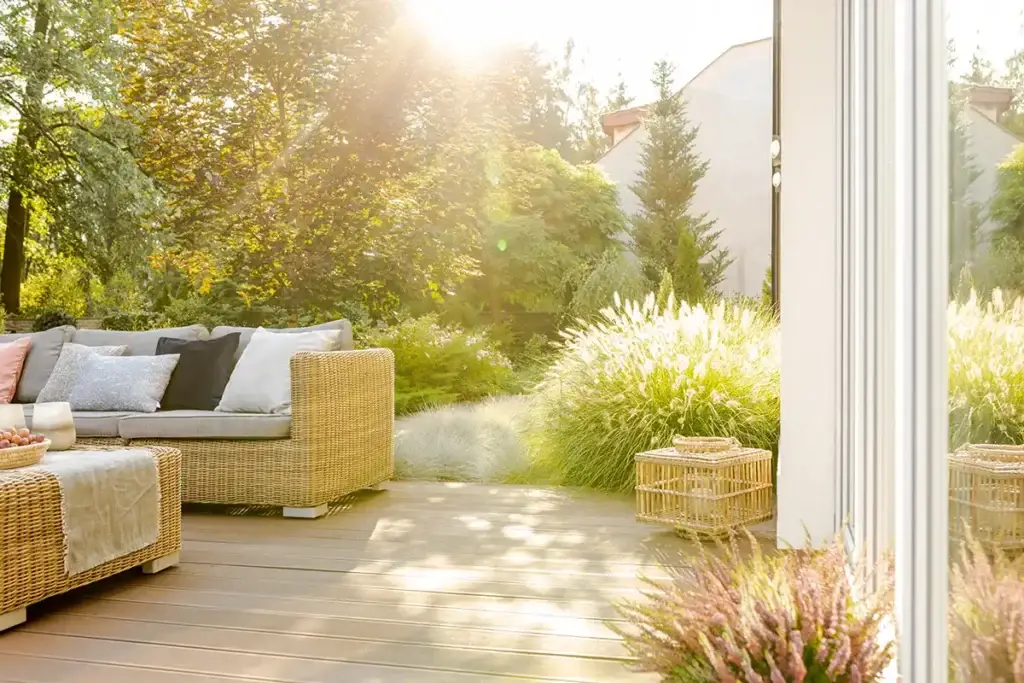
Concrete, pavers, stone, and brick all absorb heat throughout the day. By mid afternoon these materials begin radiating that heat back into the surrounding air.
Instead of cooling down, the patio continues warming even when the sun starts lowering.
Homeowners often notice this when the ground feels hot through their shoes or when outdoor furniture becomes uncomfortable to touch.
Lack of Overhead Shade
Many patios are built as simple slabs without overhead coverage. While this works well during cooler months, it offers little protection during peak sun exposure.
Without shade, the patio absorbs full sun for hours. The surrounding air temperature rises, and heat builds up around walls and windows.
This is often the moment homeowners begin researching ways to add overhead shade structures.
Heat Reflection From Nearby Surfaces
Heat can also reflect off nearby structures. Light colored walls, fences, windows, and even neighboring homes can bounce sunlight back into the patio area.
This reflection amplifies the temperature and increases glare during the hottest part of the day.
Signs Your Patio Has an Afternoon Heat Problem
Some clues appear quickly once you start paying attention to how the space behaves throughout the day.
You may notice:
- The patio becomes uncomfortable after mid afternoon
- Outdoor furniture feels extremely hot
- Sunlight hits directly across the seating area
- Glare makes it difficult to relax or use devices
- The patio cools down only after sunset
If several of these issues occur together, the space likely needs improved shade management.
Practical Ways to Cool Down a Hot Patio
There are several ways homeowners solve afternoon heat problems. The right option depends on patio orientation, climate, and how the space is used. One way homeowners reduce direct sun exposure is by adding a pergola. Learn how pergolas filter sunlight and improve comfort without fully enclosing the space.
Add Overhead Shade
The most effective solution for many patios is blocking direct sunlight before it reaches the ground. Many homeowners dealing with excessive afternoon sun are also exploring current Boise patio cover design trends to see how modern structures improve backyard comfort.
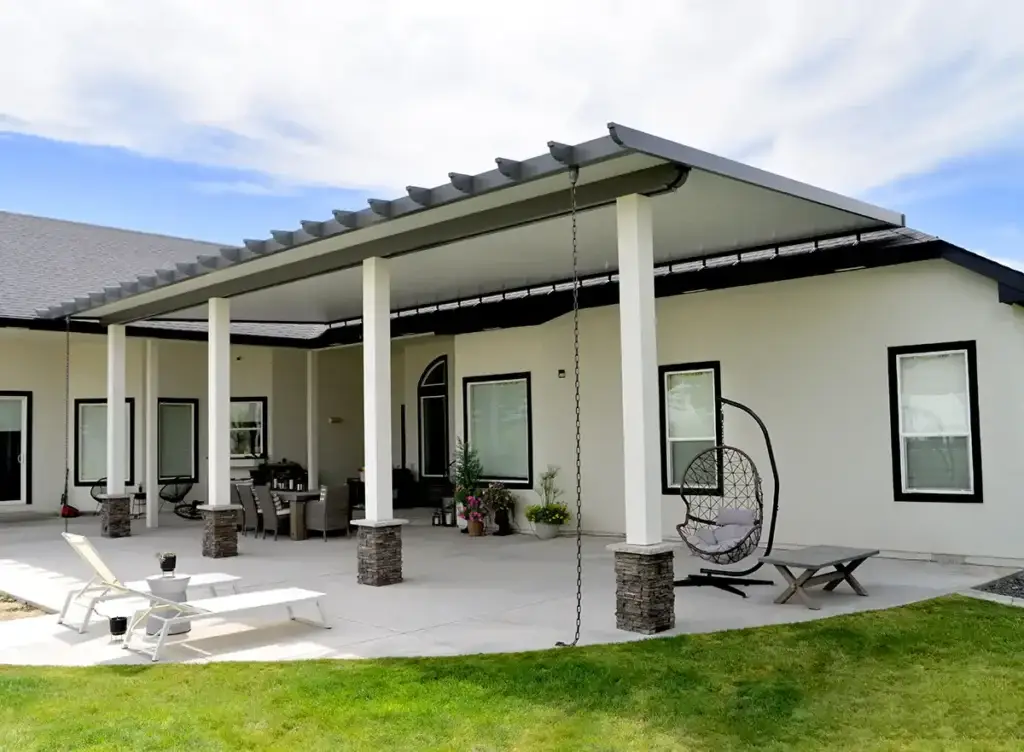
An overhead structure reduces both surface temperatures and glare. It also protects furniture and makes the space usable during peak sun hours.
Different shade options exist depending on how much coverage is needed. Patio cover materials used in the structure can also affect durability and long-term maintenance.
Many homeowners solve this by installing a patio cover that blocks direct afternoon sun.
Use Vertical Shade for Low Sun Angles
Afternoon heat often comes from the side rather than directly above. In these cases vertical shade becomes important.
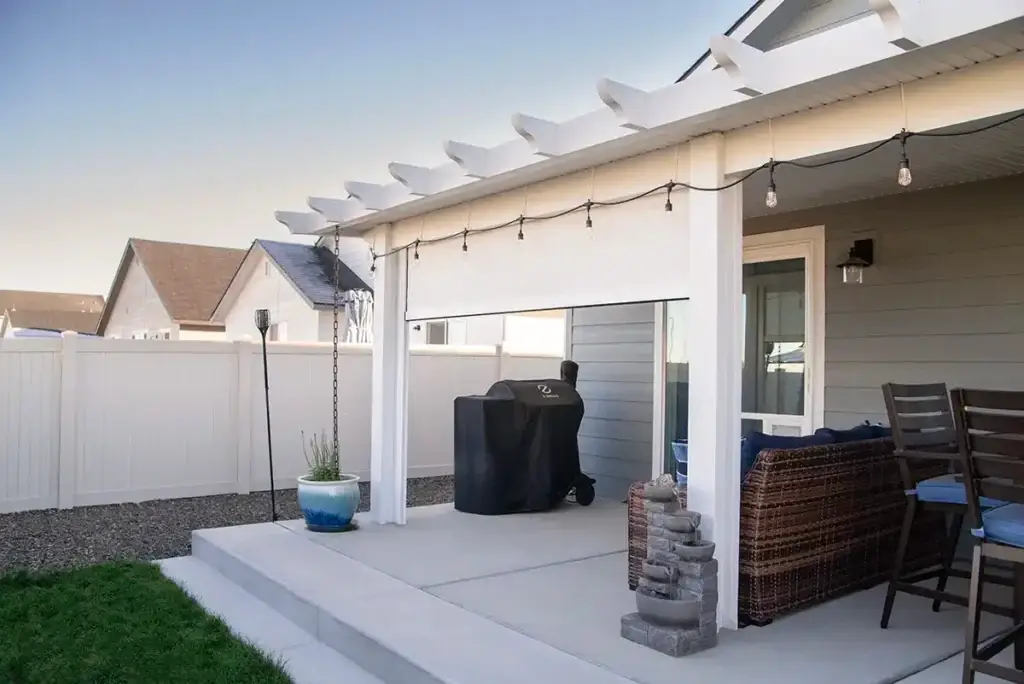
Shade screens or side panels can block low angle sunlight without closing off airflow.
They are especially helpful on patios that face west where the sun enters horizontally during late afternoon.
For patios facing west, shade screens can block low-angle sunlight while still allowing airflow.
Improve Airflow
Heat builds up when air becomes trapped around the patio area. Increasing airflow can help move that heat away.
This can be done with:
- Ceiling fans
- Open pergola structures
- Proper spacing between shade structures and walls
Good airflow keeps shaded spaces feeling noticeably cooler.
Choose Heat Resistant Materials
Some patio materials retain less heat than others. Lighter colored surfaces often reflect more sunlight and stay cooler underfoot.
In certain cases homeowners resurface or modify their patio with materials designed to reduce heat buildup.
Related guidance on outdoor material choices can help homeowners decide what works best in different climates.
You can explore examples of these solutions used by homeowners in the Treasure Valley.
Consider the Orientation of the Space
If a patio renovation is planned, it helps to consider the direction the space faces.
West facing patios typically need stronger shade solutions than north or east facing patios. Even small structural adjustments can dramatically change how the sun interacts with the space.
Homeowners researching outdoor upgrades often look for designs suited to their regional climate.
Designing a Patio That Works All Day
The goal of an outdoor living space is simple. It should be comfortable to use throughout the day.
Morning shade, afternoon cooling, and airflow all play a role in making that happen. When these elements are planned together, patios become much more usable during hot months.
Shade structures become even more important in desert climates with extreme heat.
Instead of retreating indoors after lunch, homeowners can continue enjoying their outdoor space well into the evening.
Final Thoughts
If your patio becomes too hot after 3PM, the problem usually comes down to sun exposure and heat retention. Afternoon sun angles, hard surfaces, and lack of shade can combine to create uncomfortable conditions.
Fortunately, there are practical ways to solve the issue. Adding overhead coverage, blocking low angle sunlight, and improving airflow can transform a patio from an overheated slab into a comfortable outdoor living space.
For many homeowners, a few thoughtful changes are all it takes to turn the backyard into a place that works from morning through sunset.
Serving Homeowners Across Idaho and Southern Utah
ShadeWorks designs and installs custom patio covers and outdoor shade systems throughout:
Treasure Valley — Boise, Meridian, Eagle, Nampa, Caldwell, Star, Kuna
Eastern Idaho — Idaho Falls, Rigby, Shelley, Blackfoot, Pocatello, Ammon
Southern Utah — St. George, Washington, Santa Clara, Hurricane, Ivins, Cedar City
Get a free patio cover estimate to start planning your outdoor space.